
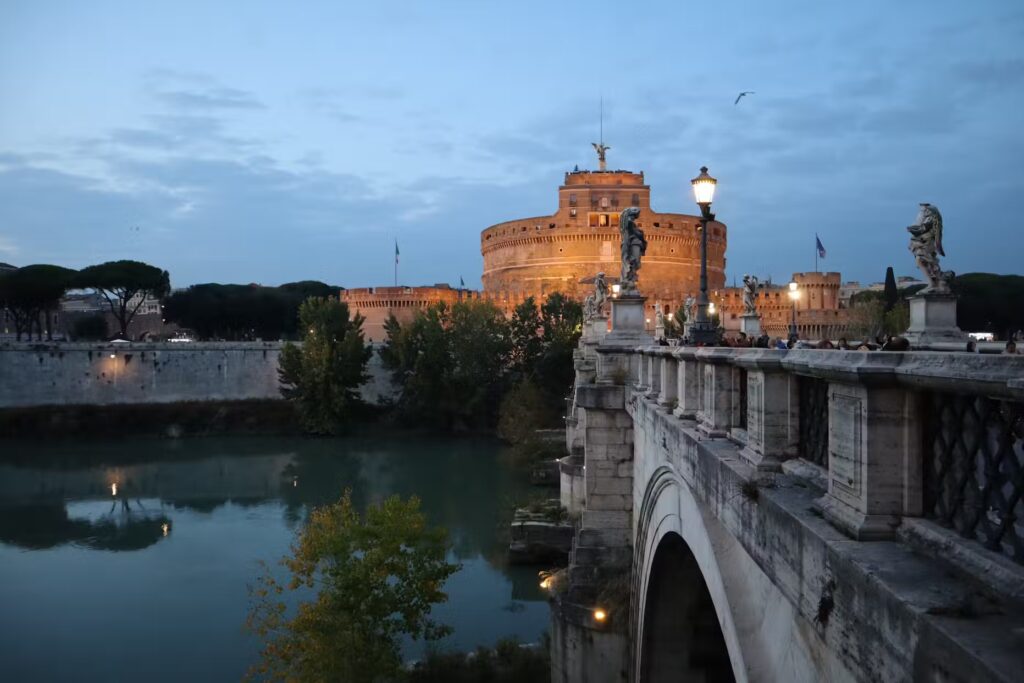

The history of castel sant'angelo in rome
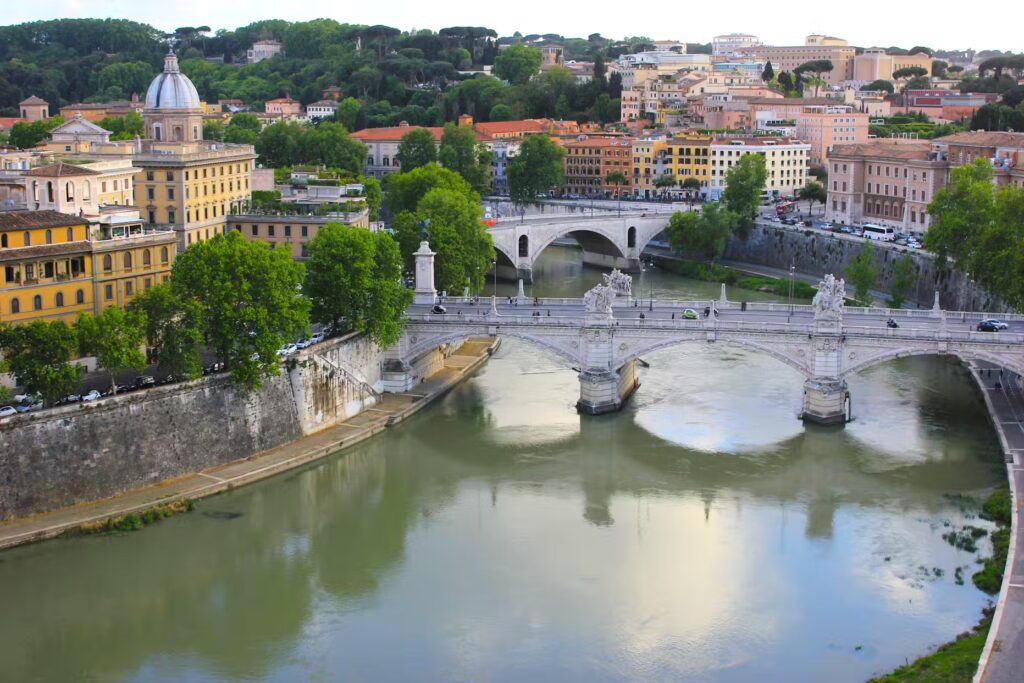
When you walk along the Tiber-more so at night-you cannot pass without seeing a sight: a great heap of bricks and stones topped with the figure of the Archangel Michael and his open wings. This is Castel sant’angelo, an ancient papal fortress that is well worth a visit both by day and after sunset, since in either light you can glimpse the surreal beauty of its nineteen centuries of history.
The Archangel and the plague: the statue of Castel sant’angelo and its legend
The fortress has been named after one medieval legend. Shortly before the Renaissance, in the late 6th century AD, a dreadful plague struck the city, which had fallen not long before that of Rome. Tens of thousands became sick and the streets were packed with corpses. Pope Gregory the Great followed with a procession and prayed to God that people who were alive would be spared. When the pope looked up at that ancient mausoleum of Emperor Hadrian, long since neglected, and in ruins, he beheld, to his astonishment, a bright figure upon the top of the vast tomb: an angel blazing brightly, and holding a sword. The cherub put the weapon down, sheathed it, as he looked on with his eyes. The message was obvious: the end of the plague and God forgave his anger. The statue atop Castel sant’angelo commemorates this legend. The existing version in bronze is dated 1700s and is a replacement to a previous one made of marble that was at the same location. The Archangel Michael sculpture serves to remind the residents of the city that God is merciful even on the worst circumstances.
Hadrian’s Mausoleum: the burials of Castel sant’angelo
Long before Castel sant’angelo was controlled by the Church, it was a major monument honoring Rome’s pagan emperors. One of the most brilliant governors of the High Empire, Hadrian, constructed a huge cylindrical tomb in order to compete with that of his great predecessor, Augustus. Their main funerary chamber is still accessible to the visitors through the gigantic spiraling ramp that makes its way into the majestic concrete building. You pass in an antechamber (formerly lined with costly marble) in which you can see the niche where was placed the statue of colossal size of Hadrian. It is there that you start climbing the giant ramp and as you enter this gigantic building of brick and concrete, you have a feeling that you are descending into the underworld despite the fact that you are actually headed upwards. It culminates in the heart of the structure the funerary chamber of the emperor. In spite of the fact that there is nothing left of its luxurious ornamentation, even the rooms where the sarcophagi of the imperial family were placed can be observed. And at least one article, the purple porphyry lid–probably, however, the personal one of Hadrian–remains, inverted, the baptismal font of the Basilica of St. Peter. Burials at Castel sant’angelo after Hadrian continued through most of the High Imperial period. Those who have come after them in the ensuing centuries are buried here also, where Marcus Aurelius and the infamous Caracalla are buried.
From monument to battlements: the post-Roman history of Castel sant’angelo
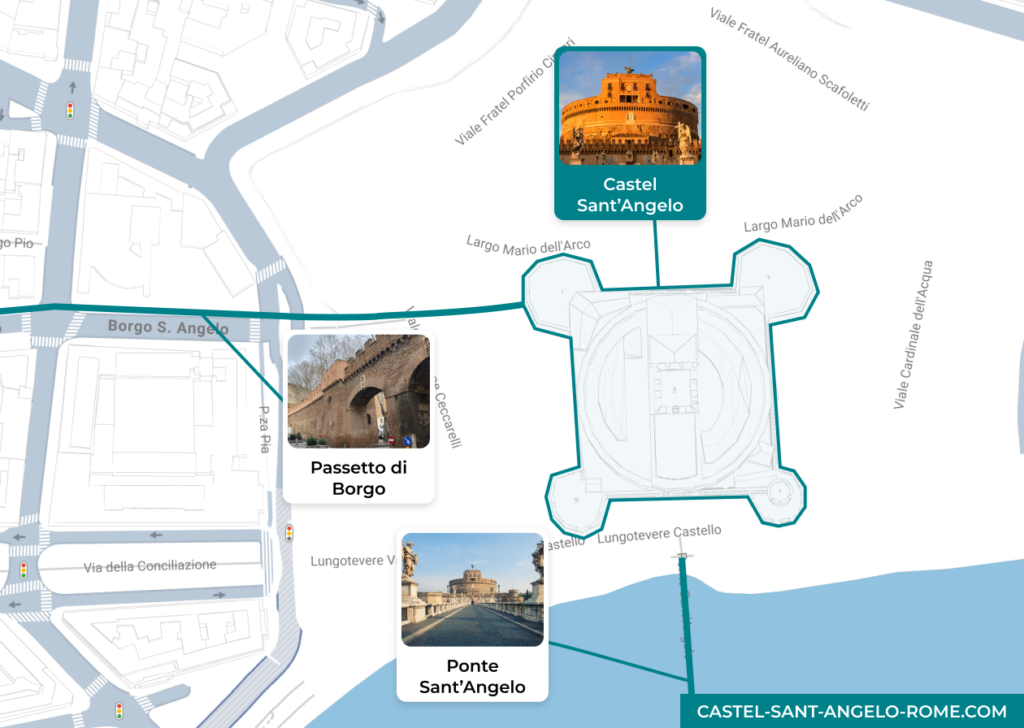
The city lives of Rome were not transformed fundamentally during the middle ages; people just exploited what was left by the ancients. Castel sant’angelo was considered an artificial mountain with sheer walls rising more than 48 meters, so Hadrian’s mausoleum made a secure defensive point. Its location was a bend on the river, and the emperor had raised it there to make the most of being seen, and a papacy which was continually attacked it was an ideal fortress. These changes were gradual in the transformation of the tomb: for the fortifications were erected, and the interiors were luxurious, under the popes who followed after him, and among whom Leo X, who commissioned Michelangelo to plan the facade of an inner courtyard. In the 6th century Castel sant’angelo was used as a prison by the ruler Flavius Theodoric and remained so until the first half of the 10th century. During the second half of the same century the building was transferred to the Crescenzi baronial family, which strengthened it still more-so that it is sometimes called Castrum Crescentii. It was different by the end of the sixteenth century; it resembled a palace rather than a castle, and the pope spent his summers there in order to take the cool breezes of the Tiber. Nevertheless, all the decorations notwithstanding, the building retained its military functions and continued to serve as the final refuge of papacy. Its most famous defensive feature was the Passetto di Borgo, a hidden corridor running from Castel sant’angelo to the Vatican; in 1527, when Rome was sacked and almost the entire Swiss Guard was massacred, Pope Clement VII escaped through this secret passage.
The spectacular view from the top of Castel sant’angelo today
Visitors, who have traversed the site through a old tomb, medieval fortifications, and the lavish Renaissance rooms reach the highest point of the structure after trying to understand the numerous historical stages of the site. Below the well-known angel, the top of the monument is a wide terrace where the whole city can be seen, and it is one of the most spectacular views of Rome.
Castel sant'angelo Map
castel sant'angelo experiences
Pick a Bundle & Save More
- BEST DEAL
- BEST DEAL
FAQ
Do I Need to Book Tickets in Advance for Castel Sant’Angelo?
Yes, it is highly recommended to book tickets in advance for popular attractions. Advance booking helps secure your spot, avoid long lines, and sometimes gain priority access. Additionally, by purchasing online, you can choose from different options, such as a skip-the-line ticket or a guided tour.
What Types of Tickets Are Available for Castel Sant’Angelo?
Most attractions offer various ticket types, including standard entry, fast-track access, guided tours, and combination passes for multiple sites. Some even provide audio guides or skip-the-line options for added convenience.
Where Can I Buy Tickets for Castel Sant’Angelo?
You can purchase tickets directly on our website. As an official partner of Tiqets.com, we provide reliable and easy access to tickets for all major attractions, ensuring a seamless booking experience.
Can I Get a Refund or Reschedule My Tickets?
Refund and rescheduling policies vary depending on the ticket provider and attraction. Some tickets are non-refundable, while others allow changes with a small fee. Always check the terms and conditions before purchasing.
Are There Discounts Available for Tickets?
Many attractions offer discounts for children, students, seniors, and families. Some sites also provide reduced prices for online bookings or during off-peak hours. Be sure to check eligibility requirements before purchasing.
What Are Combination Passes and Are They Worth It?
Combination passes, like the Roma Tourist Card and Vatican City Pass can provide access to multiple attractions at a discounted rate. They often include perks like skip-the-line access and public transport. If you plan to visit several attractions, these passes can save time and money.
What Happens If I Miss My Time Slot?
Most timed-entry tickets require you to arrive within the specified time frame. If you miss your slot, entry is not guaranteed, though some attractions may accommodate late arrivals at their discretion. Always plan to arrive early to avoid delays.