
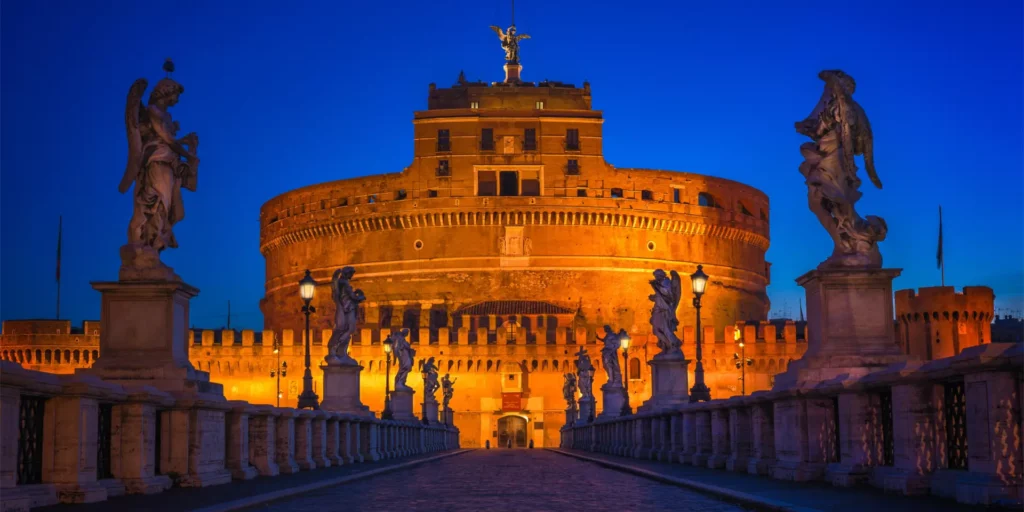

Visit castel sant'angelo in rome
Castel Sant’Angelo is Rome’s ultimate shape-shifter: part imperial tomb, part medieval fortress, part papal panic room with a rooftop view that makes you feel like you’ve stolen the city’s best secret. Originally built as Emperor Hadrian’s mausoleum, this chunky round giant later became a fortified castle where popes hid, plotted, and (let’s be honest) dramatically escaped trouble.
Your visit usually starts with a climb through spiraling ramps and thick stone corridors that still feel pleasantly “spy-movie.” Along the way you’ll pass cannons, courtyards, and tucked-away rooms that show how the building morphed from monument to military machine. Keep an eye out for the Papal Apartments, surprisingly elegant chambers painted with frescoes that prove even in a fortress, Rome insists on a little flair.
What you absolutely shouldn’t miss:
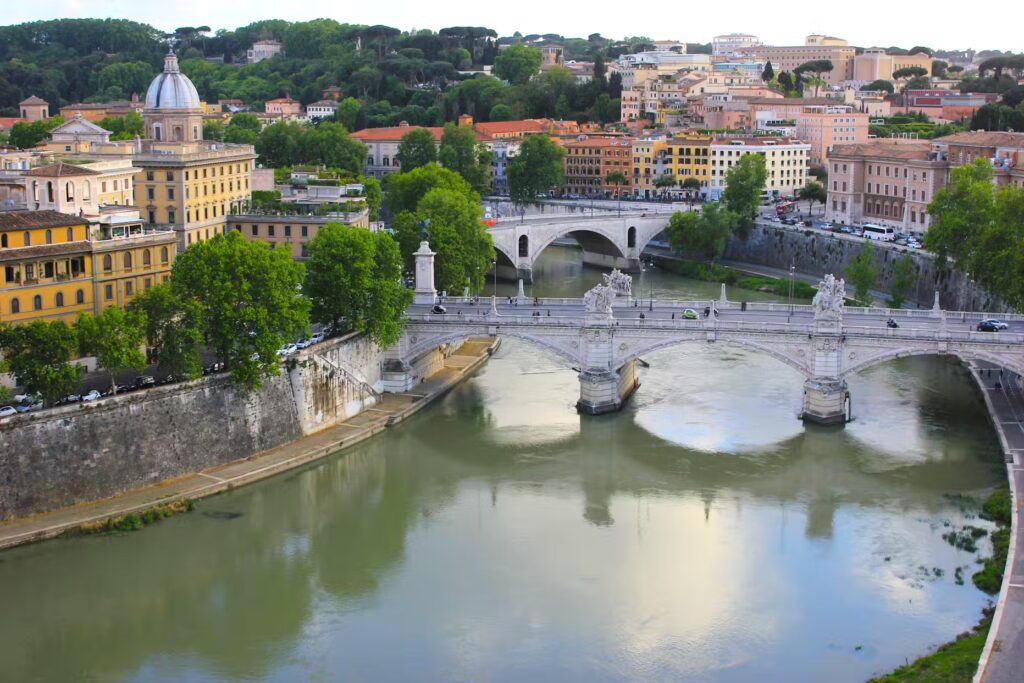
- The rooftop terrace. This is the grand finale. From up here, the Tiber curls below, St. Peter’s dome rises like a pearl, and Rome spreads out in every direction. Try to time it for late afternoon when the light turns honey-gold.
- The statue of the Archangel Michael at the top (the “Sant’Angelo” in the name). It’s the castle’s signature silhouette and a perfect photo moment.
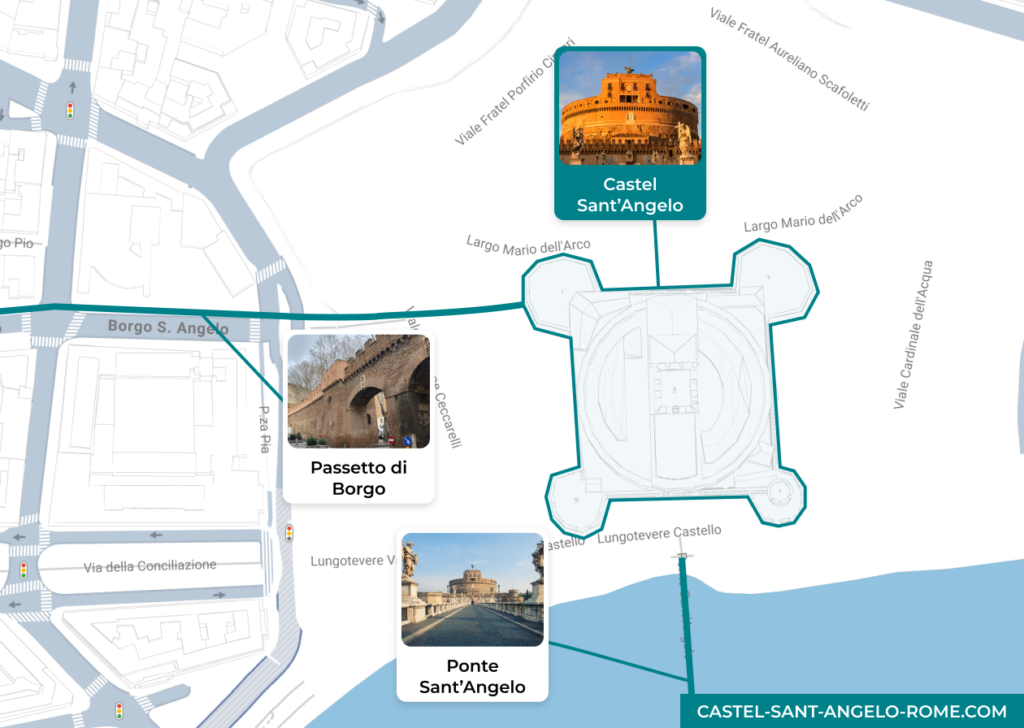
- The Passetto di Borgo connection (the famous elevated corridor route toward the Vatican). Even if you can’t walk the full passage on your ticket, learning its story adds delicious drama to the visit.
Before you go, a few practical tips: wear comfortable shoes, there are slopes and stairs; bring water in warmer months; and allow at least 1.5–2 hours if you want to explore without rushing. Bonus: stroll across Ponte Sant’Angelo afterward to admire its angel statues and get that postcard-perfect castle view. This place isn’t just history, you can feel it humming in the stone.
Map
Castel Sant'Angelo + Pantheon in Rome
Get a deal and visit two of the most common attractions in Rome at a single combo ticket. Under such option, you will save on the cost of individual admissions and have more options on dates and times to choose, without the fear of a sold-out slot.
Explore the unbelievable works of art at the Pantheon in Rome and get captured by the frescoes of Michelangelo. then walk up the Tiber to Castel Sant’Angelo, an ancient castle, and has a wonderful survey of the city.
Bundle & Save More
- BEST DEAL
- BEST DEAL
Useful info
Opening hours
Castel Sant’Angelo is open every day, allowing visitors to explore its millennia-old history and enjoy its breathtaking view over Rome. Standard opening hours are from 9:00 AM to 7:30 PM, with the last admission one hour before closing. Please note that the castle is closed on January 1st, May 1st, and December 25th. During peak seasons, such as spring and summer, it’s highly recommended to book tickets in advance to avoid long waiting times. Occasionally, special events or evening openings are available, offering a unique experience to see the castle beautifully illuminated at night.
Location
Castel Sant’Angelo is located in the heart of Rome, along the banks of the Tiber River, at Lungotevere Castello, 50. Its strategic position connects it directly to Vatican City via the Passetto di Borgo, an ancient secret passage used by popes to seek refuge in times of danger. The castle is just a short walk from St. Peter’s Square, as well as other famous landmarks like Piazza Navona and the Pantheon. Thanks to its central location, it is easily accessible on foot or by public transportation, making it a must-visit for anyone exploring Rome.
How to get there
Reaching Castel Sant’Angelo is easy due to its central location. If traveling by metro, the closest stop is Ottaviano (Line A), from which you can take a 15-minute walk down Via della Conciliazione. Several buses stop nearby, including lines 23, 40, 62, and 64, making it convenient for those coming from the city center or Termini station. If you enjoy walking, the castle is less than 10 minutes from St. Peter’s Basilica and about 20 minutes from Piazza Venezia. Alternatively, you can also arrive by bicycle or take a scenic Tiber River cruise that stops near the monument.
Best time to visit
The best time to visit Castel Sant’Angelo depends on your preferences. To avoid crowds, it is best to visit early in the morning right after opening or in the late afternoon. Spring and autumn provide mild temperatures and a pleasant atmosphere for exploring both the castle’s interior and its panoramic terrace. Summer months can be quite hot, but the castle offers shaded areas and cool indoor spaces. If available, an evening visit is an extraordinary experience, with the castle beautifully lit and an even more magical view over Rome.
Duration of the visit
The duration of your visit to Castel Sant’Angelo depends on your level of interest and the type of ticket chosen. A standard visit without a guide takes approximately 1.5 to 2 hours, allowing time to explore the frescoed rooms, museum exhibits, and the panoramic terrace. Opting for a guided tour may take 2 to 2.5 hours, as the guide provides fascinating details and historical insights. If you prefer to explore at a slower pace with an audio guide, your visit may last up to 3 hours. The best approach is to take your time and enjoy every corner of this historic treasure.
Accessibility
Since Castel Sant’Angelo is a historical monument, some areas may not be fully accessible to visitors with reduced mobility. The main entrance is accessible, but reaching the upper floors and panoramic terrace can be challenging due to narrow staircases and uneven floors. Elevators are available to provide access to certain sections, but it’s always best to check in advance for accessible routes or request assistance from the staff. Visitors with special needs are advised to book tickets in advance and inquire about the best options to make their visit as comfortable as possible.
what to see in castel sant'angelo
The Castel Sant’Angelo is among the most interesting monuments in Rome, and it is a place, which amalgamates centuries of history and change. A imperial mausoleum is now a papal fortress; a prison is now a museum: to-day it is an indispensable object to every visitor of the Eternal City. Within, the visitor is able to find frescoed rooms, ancient secret passages, art collections, and spectacular views of Rome.
As you pass the gates of Castel Sant’Angelo, you enter a maze of halls, courtyards, and galleries, each telling its own story about its long history. The building is separated into several tiers each of which reflects a portion of its amazing history.
The most interesting attractions include the National Museum of Castel Sant Angelo that displays a large number of weapons, paintings, sculptures, and historical items associated with the military and artistic history of the castle. The Exhibition Rooms are also impressive and are featured with the works of art and objects that belonged to popes and noble families.
Among the most enigmatic elements of Castel Sant Angelo, there is the Passetto di Borgo, which is the access point that is used to reach the castle and Vatican. Popes would use this escape route to escape in case they were in danger like in the case of the Sack of Rome in 1527 when the popes were able to seek refuge inside the castle due to this high pathway.
This ancient building was constructed in the form of Mausoleum of Hadrian where the remains of the emperor and his successors were to be buried. One of the most impressive architectural features is the Helical Ramp, which is a huge spiral staircase that connects the lower floor to the core of the mausoleum. This building, which was constructed to carry the urns of the emperors, enables people to walk through the identical route that was previously used by the imperial funeral processions.
In the Middle Ages and the Renaissance Castel Sant’Angelo was a popish fortress of the popes. The lavishness and strength of the Church was reflected by the Papal Apartments, which were decorated with splendid Renaissance frescoes. The Chapel of Leo X is one of these, and a secret treasure, with splendid decorations ordered by the Medici pope.
The visit has certainly included one of the most breathtaking scenes which is the Terrace of Castel Sant’Angelo and this has got a breathtaking panoramic view of Rome. It is here that you can see St. Peters Square, the Tiber River, the Pantheon and even the Colosseum. The Archangel Michael statue can be found in the terrace as well, the statue is a tribute to the fact that the angel came here in 590 AD and told the people that a plague was over.
Going down the high levels, you arrive at the Courtyard of the Angel, where is a statue of Archangel Michael–which has been brought up there at the summit of the castle. It was the place where ceremonies used to be held and military meetings took place. A short way below that, one will find the prisons, in which such a person as Benvenuto Cellini and Giordano Bruno were once kept in dungeons. The gloomy and cluttered cells serve to remind the reader about the dark history of Castel Sant’Angelo as a prison.
Once having visited the castle, it is worth walking a few meters to St. Peter Basilica and the Museums of Vatican which are the two most recognized sights in Rome with its grandiose dome and the magnificent St. Peters square. Alternatively, the Vatican Museums also contain one of the best masterpieces in the world such as the frescoes of Michelangelo in the Sistine Chapel.
To detail the itinerary, a scenic walk along the Lungotevere would be a good choice, where there are some historic bridges, such as Ponte Sant’Angelo adorned with angel sculptures by Bernini. The next place of interest is Piazza Navona which is full of Baroque fountains and Roman vibrancy.
Castel Sant’Angelo is not just a castle, it is a place which narrates the history of Rome by its walls, frescoes, and secret. It is strongly suggested to purchase your ticket ahead of time to prevent spending hours on the waiting lines and enjoy the whole process to the fullest spending time on different interesting details of this historical masterpiece, whether you are going to be guided or just to enter the palace.
FAQ
What exactly is Castel Sant’Angelo, and why does it have an “angel” in the name?
It began life as Hadrian’s mausoleum, then leveled up into fortress, papal refuge, and museum—classic Rome, always reinventing itself. The “angel” comes from the Archangel Michael statue on top and the legend tied to a vision during a plague.
Where is Castel Sant’Angelo located, and what’s the easiest way to reach it?
You’ll find it on the Tiber at Lungotevere Castello, 50, just a short walk from the Vatican area—perfect to pair with St. Peter’s in one day. Most travelers arrive on foot from the historic center and enjoy the approach over Ponte Sant’Angelo.
What are the opening hours, and are there days it’s closed?
Standard hours are Tuesday–Sunday 9:00–19:30 with last entry at 18:30, and it’s typically closed Mondays, plus Dec 25 and Jan 1. Keep an eye out for occasional special openings like “Castle Mondays.”
How much time should I plan for the visit?
Give yourself 1.5–2.5 hours if you want to explore without rushing and still linger on the terrace for photos. The route climbs level by level, so it feels like a mini adventure rather than a quick museum loop.
What are the absolute must-sees inside?
Don’t miss the dramatic ramped passages, the fortress spaces and prisons, and the richly decorated papal rooms—this contrast is the whole “wow” of the castle. The visit is designed to reveal its transformation from Roman tomb to papal stronghold as you go upward.
Is the rooftop terrace included, and is it really worth it?
Yes—the Angel’s Terrace is a headline moment, with big-sky panoramas over Rome and that iconic Archangel silhouette overhead. It’s one of the best “I can’t believe this view is real” spots in the city, especially late afternoon.
Can I walk the Passetto di Borgo from Castel Sant’Angelo to the Vatican?
The Passetto is a fortified corridor about 800 meters long that linked the Vatican and the castle as an emergency escape route for popes. Access depends on specific tours/initiatives, so it’s best treated as a special add-on rather than a guaranteed part of every visit.