
Step inside the National Museum of Castel Sant’Angelo and follow a route that rises from ancient corridors to frescoed rooms and, finally, the panoramic terrace. This cylindrical landmark on the Tiber began as the funerary monument of Hadrian, became a fortified bastion and papal refuge, and today houses the museum that tells each chapter with spaces, objects, and views. The interior is not a single style but a sequence of atmospheres: cool stone at the base, warmer Renaissance salons above, and open air at the top where the bronze angel crowns the skyline.

What you’ll see inside this layered Roman monument

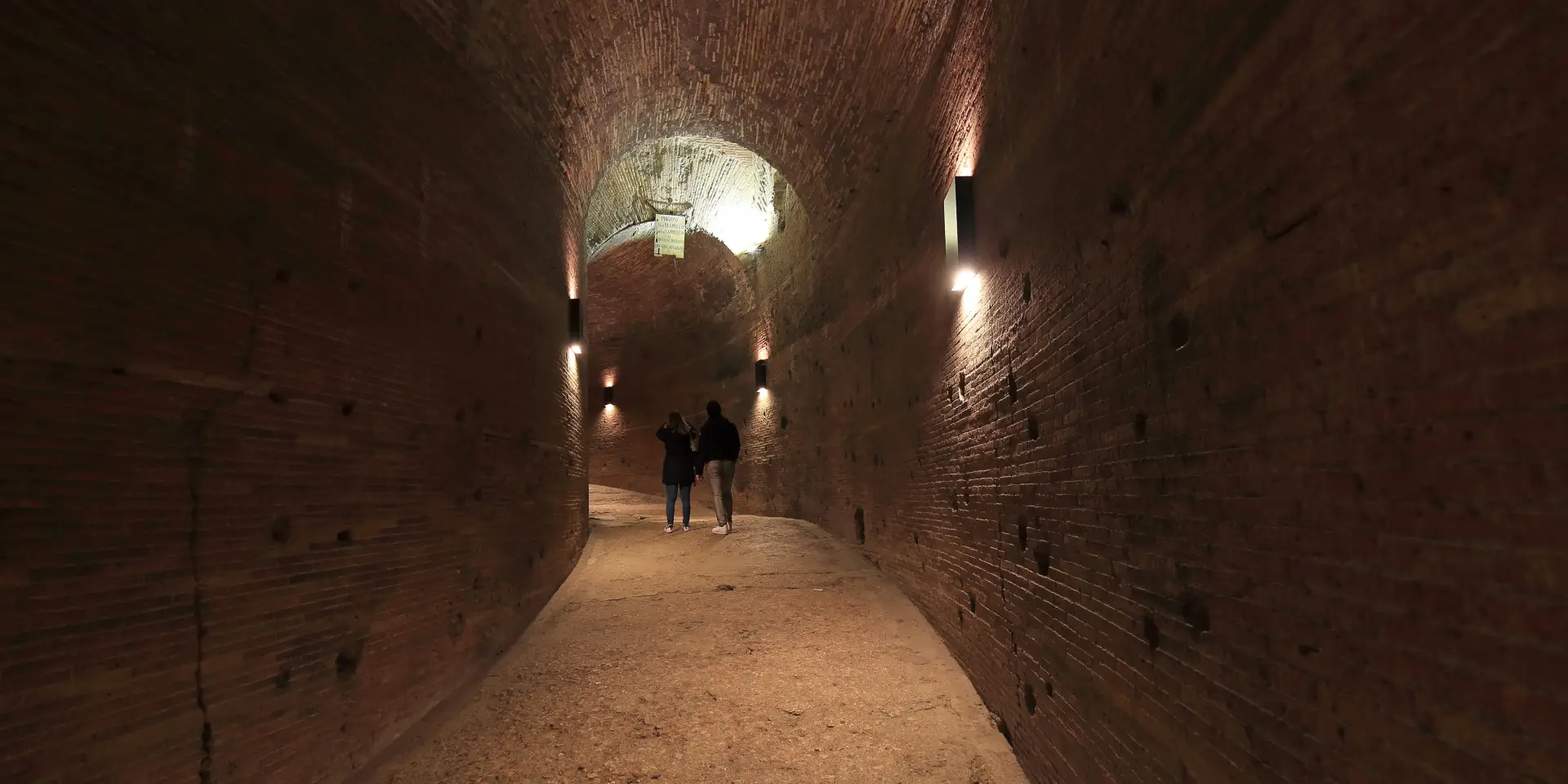
The visit reads like a timeline you can walk. Lower levels recall the original mausoleum—barrel-vaulted passages and thick masonry designed for permanence. As you climb, the setting shifts to stronghold and residence: lookout points over the river, artillery memories, and apartments where authority once lived behind guarded doors. Throughout, the museum displays art and military memorabilia in ways that accent the building rather than compete with it, so your eye always returns to the structure’s circular geometry.

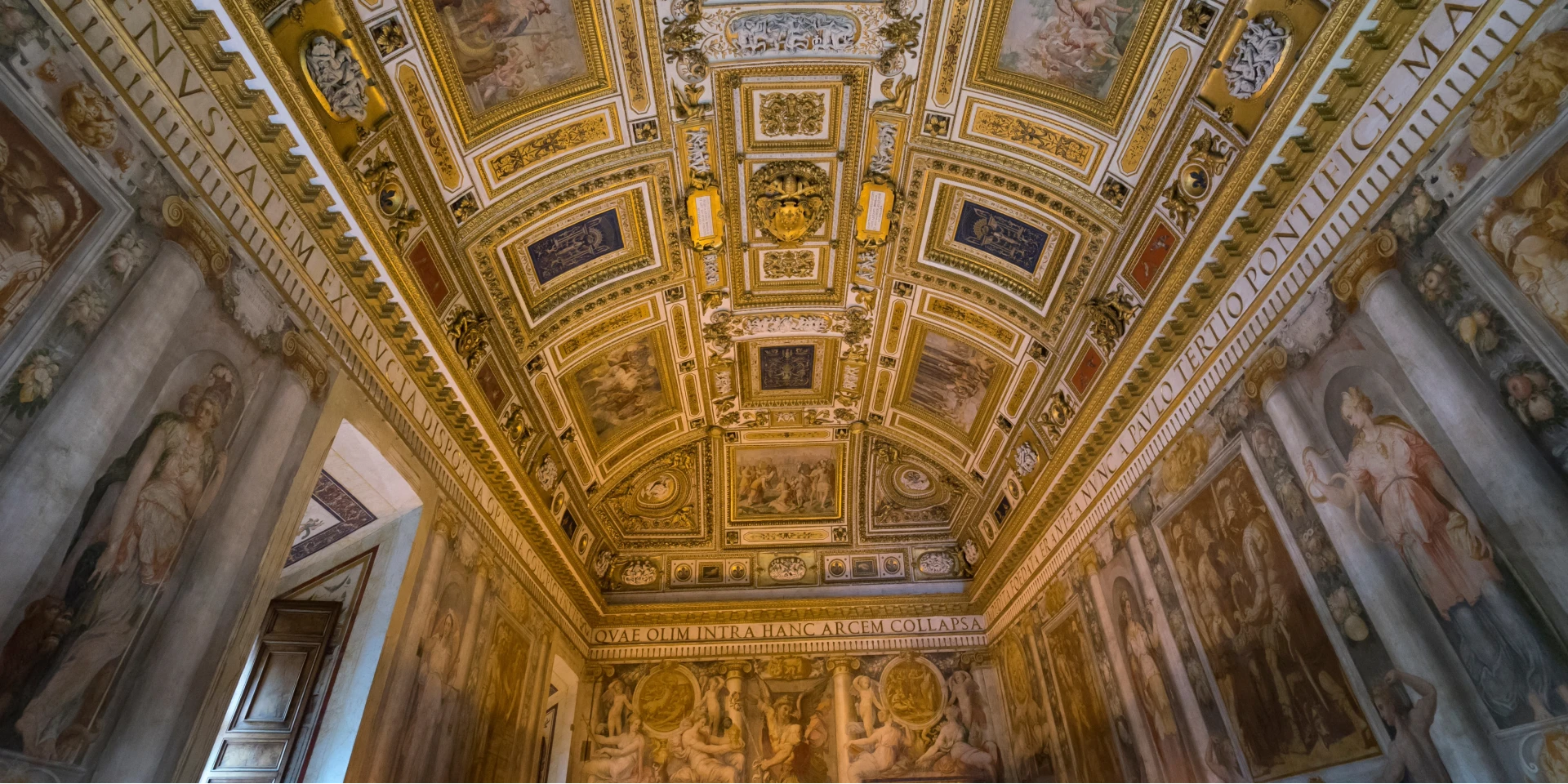
The route is intuitive. A helical ramp sets the rhythm; short stairways connect later additions; wider rooms invite you to pause. In the salons, ceilings bloom with painted allegories, chimneys carry papal insignia, and stucco frames guide your gaze. The museum’s identity—Museo Nazionale di Castel Sant’Angelo—is present in vitrines of armor and decorative arts, but the architecture remains the protagonist. It’s easy to sense how the fortress once guarded the approach to Vatican City, with Ponte Sant’Angelo at its feet.

Highlights, routes, and the rooftop perspective

Expect contrasts that reward unhurried pacing. Narrow passages open suddenly to vistas of the river. Dim stairwells lead to rooms bright with fresco. Inscriptions whisper from stone while painted cycles announce power and myth. The audio guide app ties these shifts together, giving context at each stop and letting you replay sections if a space is busy. Because the museum route culminates on the upper terrace, you experience the narrative in ascent; the final view is part of the story.

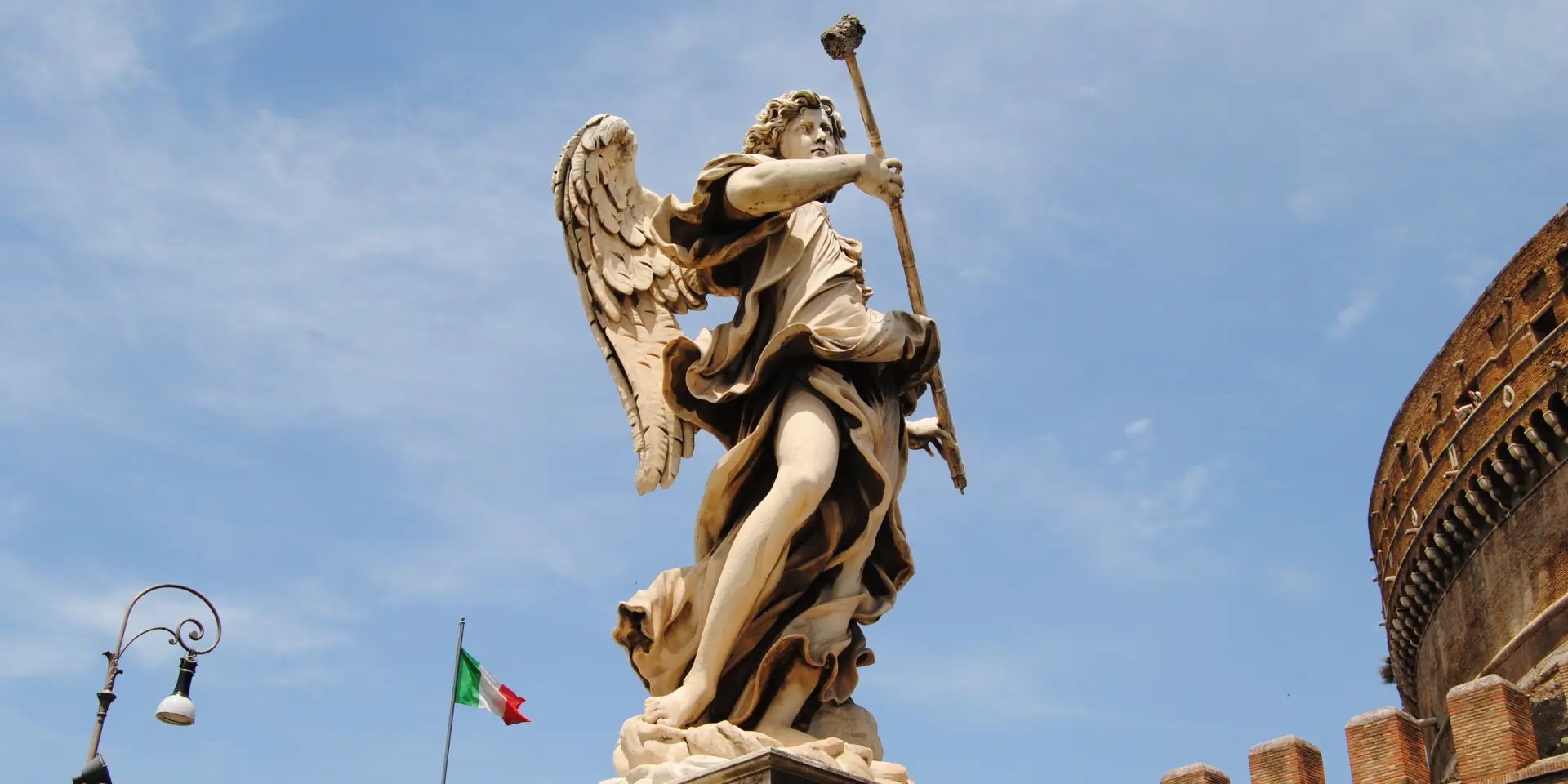
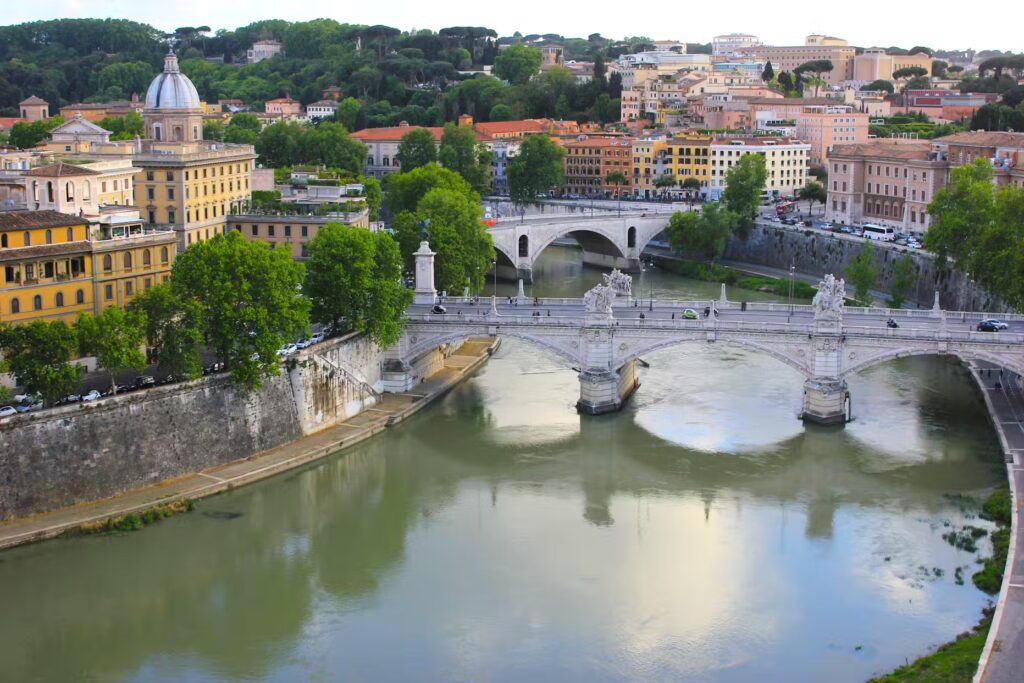
The terrace is a showpiece. From here, the dome-studded city spreads from St. Peter’s across the river bends to the historic center. Look down to the bridge of angels and up to the archangel that gives the site its name; both frame the fortress within Rome’s larger picture. Photographers appreciate the changing light late in the day, when stone warms and the river glints. Even if you come for the interiors, the rooftop perspective completes the visit.

A self-guided format suits this museum. You set the tempo, linger where details call you, and move on when a gallery fills. The downloadable audio guide app covers the main rooms in a clear sequence and keeps directions simple so you can focus on what’s in front of you. If you arrive with family, the narration is concise enough for varied attention spans; if you’re design-minded, it points out thresholds, cornices, and surviving fragments that reveal how the building evolved.

What you won’t find is theatrical re-creation—the museum relies on real walls, real rooms, and measured displays. That restraint is part of the appeal. You learn through evidence: the spiral of the ramp under your feet; the weight of masonry that turns sound to hush; the change from utilitarian surfaces to ceremonial finishes as the route rises. For many visitors, this physical storytelling is the reason to come inside rather than admire the exterior from the riverside alone.

It’s also a place where different interests meet. History lovers trace Rome’s political shifts from empire to papal city. Architecture fans read the layers in plan and elevation. Art followers study Renaissance fresco cycles that still hold their color. Casual travelers climb for the terrace and leave with a sense of how the fortress guarded and symbolized the city. Even opera fans spot echoes of Puccini’s Tosca, which uses the castle’s drama as a backdrop.

When you’re ready to book, secure your timed entry with the audio guide app directly on Tiqets and explore the museum route, rooms, and terrace at your own pace.
SHOW MORE

Castel Sant'Angelo: Entry Ticket + Audio Guide

Admire the Castel Sant’Angelo museum and enjoy the view from the terrace

Vatican Treasures: St. Peter’s Basilica, Passetto Di Borgo & Castel Sant’Angelo

Explore three of Rome and the Vatican’s most iconic sites with one ticket

Castel Sant'Angelo & Rome Pantheon: Skip The Line Ticket

Explore ancient relics, admire Renaissance art, and enjoy stunning city views

Booking Info

Your preferences in Tiqets are a perfect fit of your visiting preferences. Entry Ticket + Audio Guide App is a package that includes the entry to the museum and the access to permanent and temporary exhibitions, as well as to downloadable app (English, Italian, French, German, Spanish, Chinese). Once you buy it, you will be sent another email with the downloading link, install it until you come, and carry your own earphones. In order to deal with capacity you can be given the time as close as possible to the one which you choose- always use the printed time on your voucher. This is generally non-refundable with no rescheduling option, a refundable fare, where available, permits you to have full refunds, should you cancel before 23:59 on the day before your visit.

Hosted Priority Entry Ticket is not a guide but is more about a smoother access. It is comprised of entrance priority, support at the entrance, and the terrace. You will come at the front door with employees escorting you and later go on your own using your pace. This is the one that normally gives 24 hours free cancellation prior to the visit and re-scheduling up to 24 hours prior (policies are displayed during checkout and on your confirmation).

The package features a live guide (usually English, Italian, Spanish), headsets to hear, jump a queue, and a condensed tour of the major rooms and vantage points. They last about 1-2 hours, and there are also express and standard versions of it that are available at the counter. The majority of guided tours have free cancellation within 24 hours before the event and some of them can be rescheduled- once again, look at the specifics of your option.

The way the ticket works: when you pay, you will get an instant mobile voucher. Prepare it on your phone at the gate (or with the host, to get priority/guided options). Carry a photographic identification, when asked by the regional provider. Access is through 50 Lungotevere Castello; it might have security checks, so a small bag and no hands style can be of help.

Families and concessions: the venue regularly uses national-museum concessions (e.g., free or reduced entry on particular age groups and / or on certain days) although option and date may differ in eligibility and procedures. Check out: look at the Known before you go notes on your ticket and on your ticket voucher; bring these notes plus the necessary identification documents with you; in case of a reduction, bring these.

SHOW MORE
Service NameAttractionSupplierfrom €BOOK NOW
National Museum
Tiqets
FROM €35,00
National Museum
Tiqets
FROM €79,00
National Museum
Tiqets
FROM €23,00
National Museum
Tiqets
FROM €18,20

Bundle & Save More

Hop-on Hop-off Tiber River cruise + entrance to Castel Sant’Angelo with audio guide.
INCLUDED:
National Museum of Castel Sant’Angelo
Entry Ticket
FROM €35,00
Digital pass for Vatican Museums and St. Peter’s, with flexible choices and tickets sent via email.
INCLUDED:
Passetto di Borgo, The Mausoleum of Hadrian, Interior of Castel Sant’Angelo, National Museum of Castel Sant’Angelo
Entry Ticket
FROM €71,50
FROM €79,00
Flexible pass to choose Colosseum, Vatican or other icons of Rome.
INCLUDED:
National Museum of Castel Sant’Angelo, Interior of Castel Sant’Angelo, The Mausoleum of Hadrian
Entry Ticket

Useful info

Current opening hours on Tiqets show Castel Sant’Angelo open daily from 09:00 to 19:30. Plan enough time for security and to enjoy the terrace before closing. If your ticket includes a specific time, follow the PDF’s confirmed slot, which is your reference for entry and any last-minute updates sent with your digital tickets.
The museum stands on the right bank of the Tiber at 50 Lungotevere Castello, a short walk from St. Peter’s and the Bridge of Angels. Some guided experiences, like the Passetto tour, start at Piazza del Risorgimento—use the exact meeting-point notes in your voucher to avoid backtracking between Vatican and riverfront.
Reach the area on foot from the Vatican/Prati district or by taxi and public transport toward the river. For guided products, aim to arrive 15 minutes early to complete check-in with staff. Keep your mobile tickets downloaded for offline access, as thick walls and nearby structures can affect reception around entrances and narrow corridors.
Morning hours are calmer for interior rooms; late afternoon suits terrace photos when the skyline softens into golden hour. If you plan a combo day, schedule the museum between other bookings so you can pace the galleries and still reach outdoor viewpoints with enough time before closing.
Allow roughly 2–3 hours to explore multiple levels and the terrace at an unhurried pace. If you add the Passetto tour or a second attraction, build buffer time between bookings to avoid rushing the transition from guided segments to your independent museum circuit.
The audio-guide ticket page notes wheelchair accessibility, while general notes highlight the historic nature of the venue with stairs and narrow passages. If step-free access is essential, review your product page and speak to staff on arrival for the most suitable route through exhibits and upper levels.

History

Hadrian conceived the structure as a monumental resting place for himself and his family, and the massive cylindrical drum still dominates the riverfront. Over the centuries, the building was integrated into Rome’s defenses, shielding approaches to the Vatican. Its purposes shifted with each era: fortress in conflict, prison in turmoil, and ceremonial residence in times of papal consolidation. Today these layers remain legible floor by floor.

A modern visit traces this evolution: you can see martial collections on the lower level, the mausoleum zone, and richly decorated Renaissance spaces that hint at the castle’s residential chapters. Far above, the terrace delivers a finale with broad views over the Tiber and the city skyline. Experiencing the museum as a sequence—from tomb to stronghold to curated galleries—frames Rome’s story in stone, showing how one building adapted to power, security, and urban life through two millennia.

SHOW MORE

Reviews

Gallery

Tips