
Step inside the National Museum of Castel Sant’Angelo and follow a route that rises from ancient corridors to frescoed rooms and, finally, the panoramic terrace. This cylindrical landmark on the Tiber began as the funerary monument of Hadrian, became a fortified bastion and papal refuge, and today houses the museum that tells each chapter with spaces, objects, and views. The interior is not a single style but a sequence of atmospheres: cool stone at the base, warmer Renaissance salons above, and open air at the top where the bronze angel crowns the skyline.
What you’ll see inside this layered Roman monument
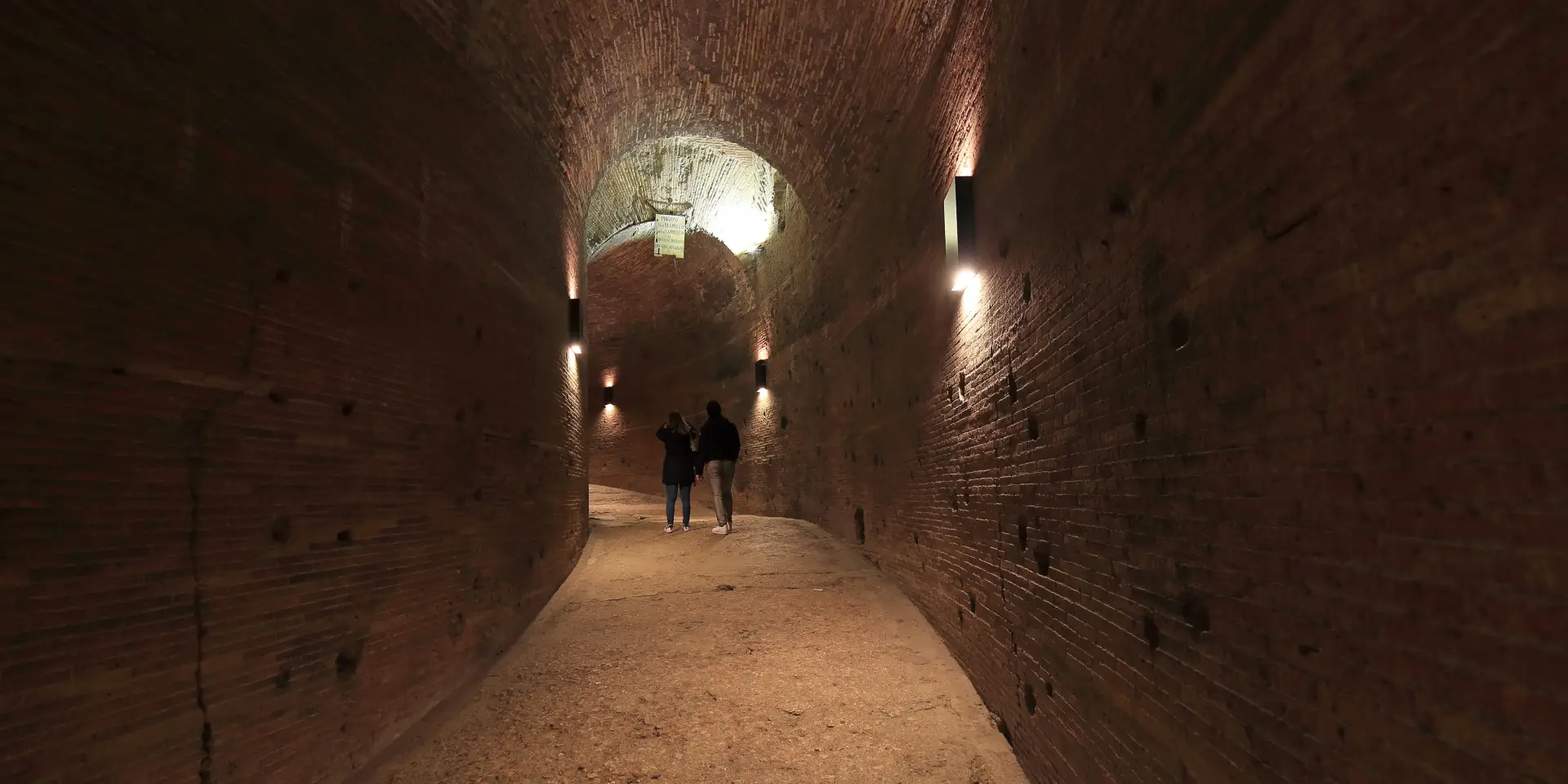
The visit reads like a timeline you can walk. Lower levels recall the original mausoleum—barrel-vaulted passages and thick masonry designed for permanence. As you climb, the setting shifts to stronghold and residence: lookout points over the river, artillery memories, and apartments where authority once lived behind guarded doors. Throughout, the museum displays art and military memorabilia in ways that accent the building rather than compete with it, so your eye always returns to the structure’s circular geometry.
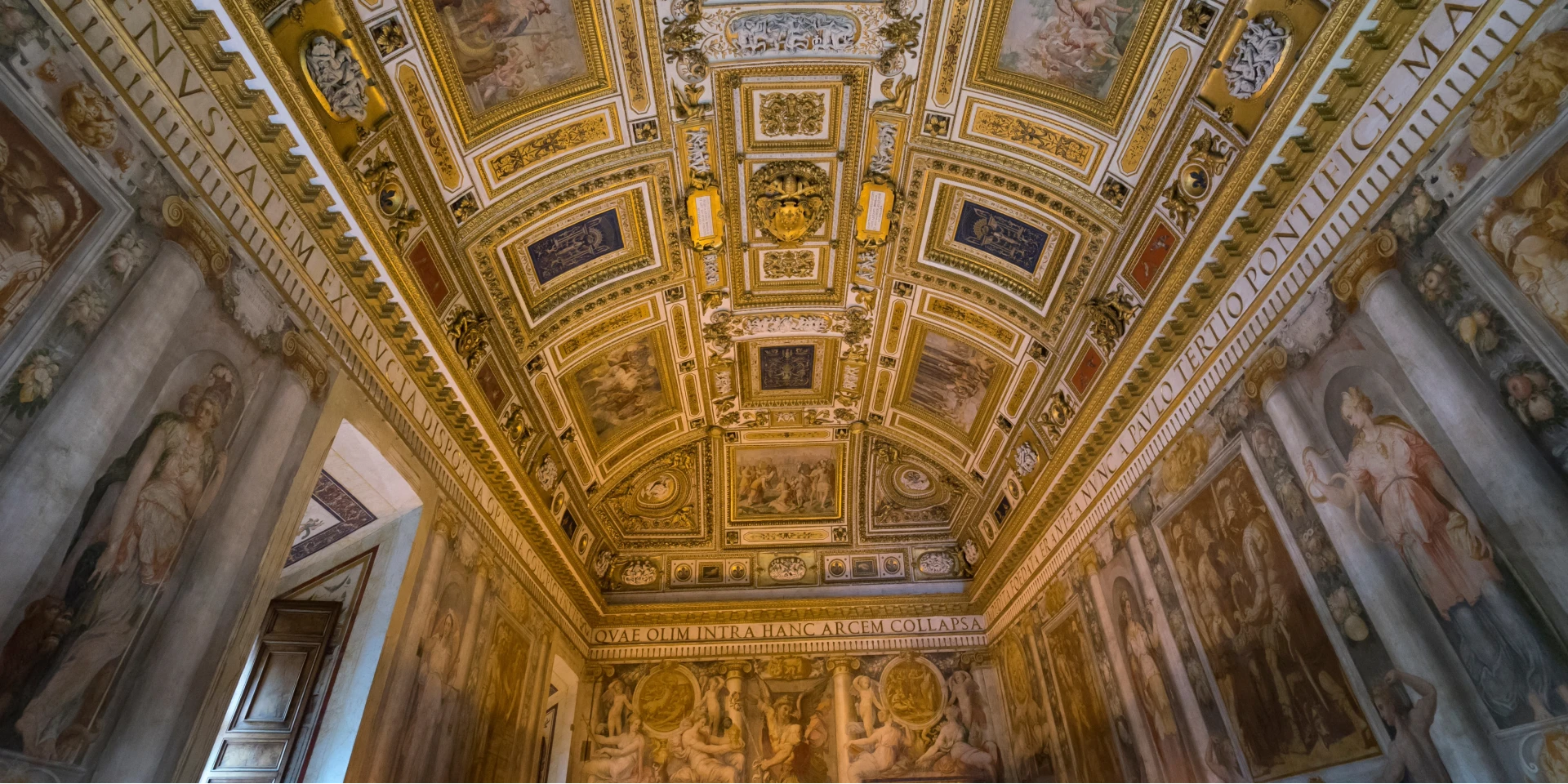
The route is intuitive. A helical ramp sets the rhythm; short stairways connect later additions; wider rooms invite you to pause. In the salons, ceilings bloom with painted allegories, chimneys carry papal insignia, and stucco frames guide your gaze. The museum’s identity—Museo Nazionale di Castel Sant’Angelo—is present in vitrines of armor and decorative arts, but the architecture remains the protagonist. It’s easy to sense how the fortress once guarded the approach to Vatican City, with Ponte Sant’Angelo at its feet.
Highlights, routes, and the rooftop perspective
Expect contrasts that reward unhurried pacing. Narrow passages open suddenly to vistas of the river. Dim stairwells lead to rooms bright with fresco. Inscriptions whisper from stone while painted cycles announce power and myth. The audio guide app ties these shifts together, giving context at each stop and letting you replay sections if a space is busy. Because the museum route culminates on the upper terrace, you experience the narrative in ascent; the final view is part of the story.
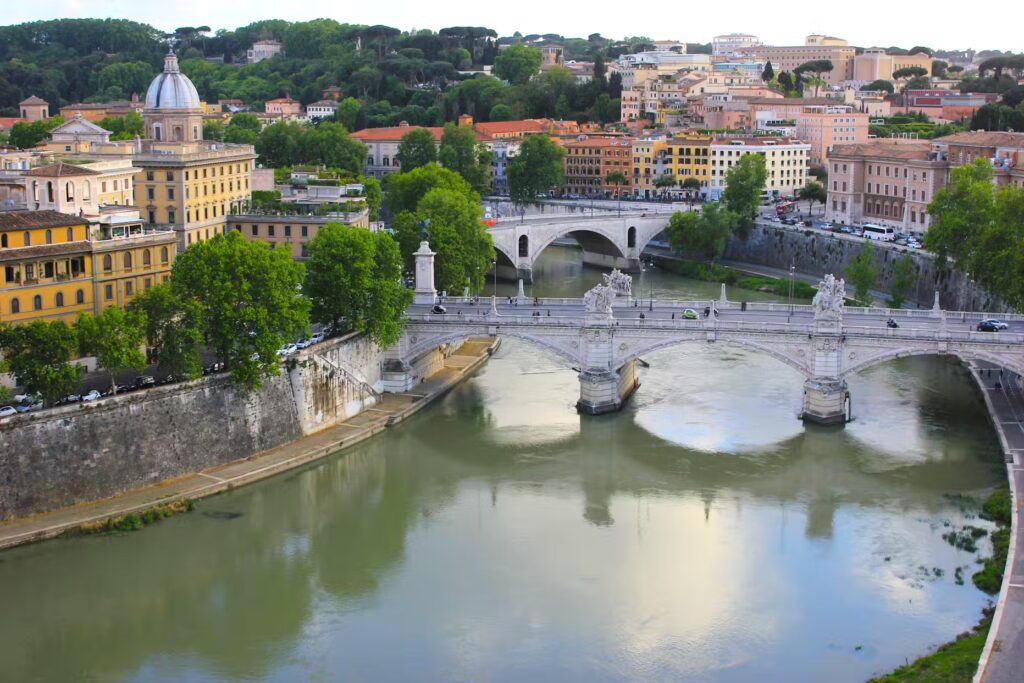
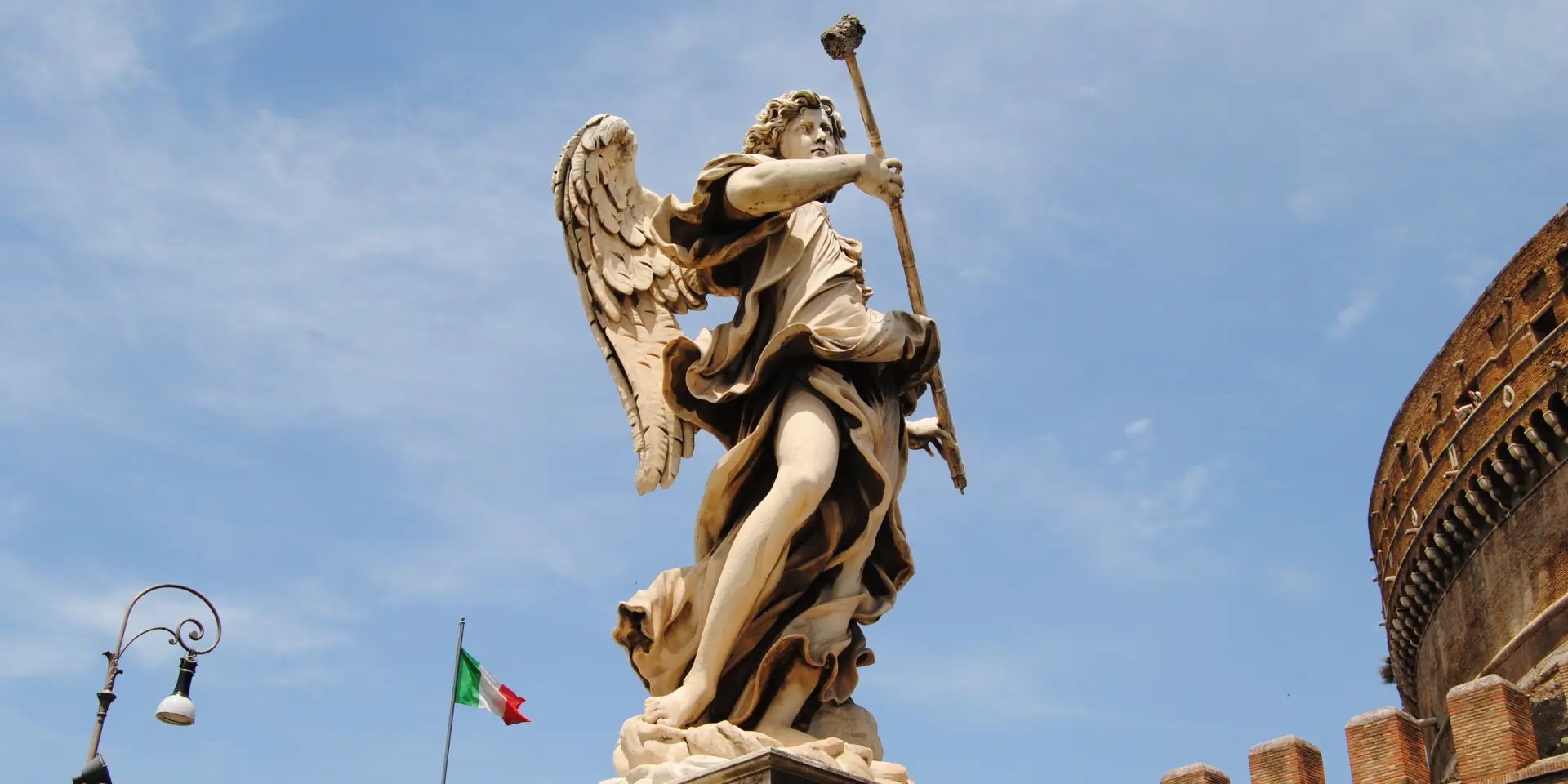
The terrace is a showpiece. From here, the dome-studded city spreads from St. Peter’s across the river bends to the historic center. Look down to the bridge of angels and up to the archangel that gives the site its name; both frame the fortress within Rome’s larger picture. Photographers appreciate the changing light late in the day, when stone warms and the river glints. Even if you come for the interiors, the rooftop perspective completes the visit.
A self-guided format suits this museum. You set the tempo, linger where details call you, and move on when a gallery fills. The downloadable audio guide app covers the main rooms in a clear sequence and keeps directions simple so you can focus on what’s in front of you. If you arrive with family, the narration is concise enough for varied attention spans; if you’re design-minded, it points out thresholds, cornices, and surviving fragments that reveal how the building evolved.
What you won’t find is theatrical re-creation—the museum relies on real walls, real rooms, and measured displays. That restraint is part of the appeal. You learn through evidence: the spiral of the ramp under your feet; the weight of masonry that turns sound to hush; the change from utilitarian surfaces to ceremonial finishes as the route rises. For many visitors, this physical storytelling is the reason to come inside rather than admire the exterior from the riverside alone.
It’s also a place where different interests meet. History lovers trace Rome’s political shifts from empire to papal city. Architecture fans read the layers in plan and elevation. Art followers study Renaissance fresco cycles that still hold their color. Casual travelers climb for the terrace and leave with a sense of how the fortress guarded and symbolized the city. Even opera fans spot echoes of Puccini’s Tosca, which uses the castle’s drama as a backdrop.
When you’re ready to book, secure your timed entry with the audio guide app directly on Tiqets and explore the museum route, rooms, and terrace at your own pace.